


Agriculture Pipes vs. Industrial Pipes: Understanding the Differences
- shakshi sharma
- Aug 28, 2025
- 4 min read

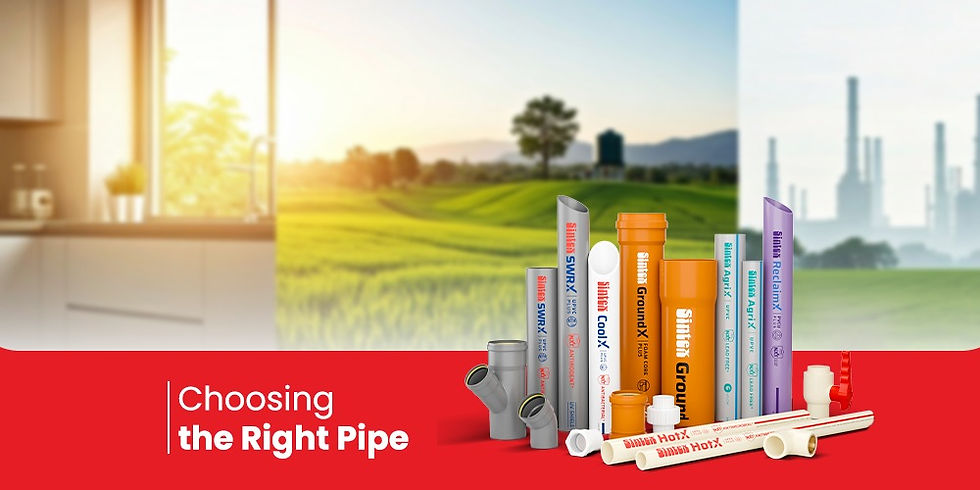
Have you ever wondered why some pipes do not last and perform as you expect? They could not be designed to do such a task. Whether managing a large-scale farm or running a manufacturing unit, pipes can make or break your operations.
At Sintex, we often hear this question: What’s the difference between agricultural and industrial pipes? Let’s simplify it in plain language with all the details you need to make the right call.
First Things First—Why the Right Pipe Matters
You would not use sandals while visiting a construction site. In the same way, do not expect an agricultural water pipe to withstand the high-pressure, high-temperature needs of an industrial process. It goes beyond safety and performance to also include savings, maintenance, and tranquillity.
For this reason, grasping the difference between agriculture pipes and industrial pipes is essential to wise spending. Let's partner to figure it out.
What Are Agriculture Pipes Designed For?
Agriculture pipes are constructed with optimum water transportation to crops in mind. This means that pipes must be affordable, easy to care for and protective in the outdoors. They’re typically used for:
Drip and sprinkler irrigation
Flood irrigation setups
Connecting water pumps and borewells
Fertilizer delivery systems
Rural drinking water projects
At Sintex, our agricultural irrigation pipe range is designed with high-quality materials that withstand UV exposure, changing weather, and rough handling on the field. The goal? Make farming easier, smarter, and more reliable.
We also offer a wide selection of agri pipe fittings because every farm has its own layout and needs flexible connections and extensions.
Industrial Pipes – Built for Tougher Challenges
Now, let’s talk about industrial pipes. These pipes handle a completely different environment. Think of high pressures, corrosive chemicals, hot liquids, and continuous operation. From chemical manufacturing to food processing, from oil and gas to cooling systems—industries need rigid materials that can perform under pressure (literally).
Our industrial PVC pipe solutions are built to meet demanding pressure ratings, with resistance to chemicals, impact, and temperature changes. They come with consistent dimensions and smoother surfaces, which means higher efficiency and minimal pressure loss.
If you’re using UPVC pipes in India for industrial applications, ensure they’re rated for industrial-grade performance. Not all UPVC pipes are created equal—and that’s where we step in with precision, quality control, and proven performance.
Key Differences Between Agriculture and Industrial Pipes
Let’s make this simple. Here are the major differences that matter when choosing between agriculture pipes and industrial pipes:
1) Usage and Applications
Agriculture pipes are used for irrigation, rural water supply, and sometimes low-pressure wastewater.
Industrial pipes are used in chemical processing, manufacturing plants, HVAC systems, and pressurized water delivery.
2) Pressure Ratings
Agricultural water pipe options usually operate under moderate pressure, just enough for irrigation systems.
Industrial PVC pipes have high-pressure ratings, ensuring they don’t crack or deform under extreme loads.
3) Material Composition
Agricultural pipes are made for flexibility and cost-efficiency.
Industrial and UPVC pipes India trusts are engineered for high resistance and dimensional stability.
4) Durability and Strength
In agriculture, pipes deal with harsh field conditions but not aggressive fluids.
Industrial environments demand resistance to chemicals, abrasion, and heat.
5) Fittings and Customization
Our agri pipe fittings are designed for quick assembly and disassembly, which is ideal for farms where setups change often.
Industrial fittings are engineered for leak-proof joints, longer service life, and fixed infrastructure systems.
How Sintex Serves Both Worlds
At Sintex, we don’t believe in one-size-fits-all. Different types of engineering go into agricultural and industrial agriculture pipes.
Whether you are looking for an agricultural irrigation pipe to maintain crop hydration or an industrial-grade performance PVC pipe system, we have what you need.
Quality goes hand in hand with observing deadlines.
Our manufacturers conduct material testing and analysis, ensuring they meet standards set within the industry. Because we serve both sectors, we marry the best of both worlds, bringing forth industry innovation alongside the field’s pragmatism.
Choosing the Right Pipe: Questions to Ask
Still confused about what to pick? Ask yourself:
What will the pipe carry—water, chemicals, or something else?
Will it be exposed to sunlight and weather or kept indoors?
How much pressure and temperature will it need to handle?
Is it a temporary setup or a long-term investment?
Your answers will help guide you toward the right product. And if you're ever in doubt, our team at Sintex is here to guide you.
Final Thoughts
A faulty pipe can cost you a harvest if you're in farming. If you're in the industry, a burst pipe can halt production. Pipes may look simple, but they play a critical role in the success of your operations.
So, the next time you’re choosing between agriculture pipes and industrial pipes, remember—it’s not about which is better, but which is right for you.
We at Sintex are committed to helping you make the right decision with premium-quality, high-performance piping solutions tailored to your application. From agricultural irrigation pipe setups to rugged industrial PVC pipe systems, we offer excellence, reliability, and innovation every step of the way.
Comments